 GuangSou (WGEBU) logo

A fiberglass mesh roll is used to reinforce plaster, render, and other compatible coating systems. Embedded within the correct material, it helps distribute stresses across the reinforced layer and reduce the risk of surface cracking. Its roll format also makes it practical to cover large wall areas while cutting smaller pieces for corners, openings, and other details.
However, not every mesh is suitable for every application. Wall plastering, exterior insulation systems, stone backing, and waterproofing each have different requirements for mesh construction, coating, tensile performance, and compatibility.
This guide explains six important fiberglass mesh roll applications, how to approach material selection, and the installation principles that help reinforcement perform as intended.
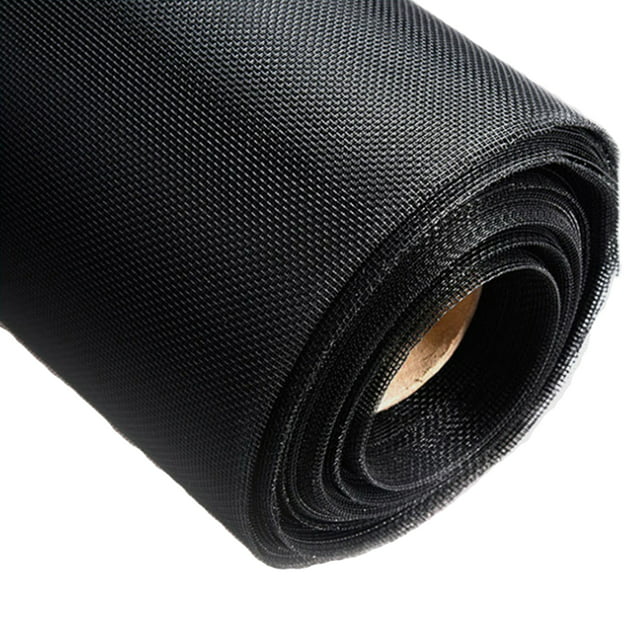
Black fiberglass window screen mesh supplied in roll form.
Top Applications of Fiberglass Mesh Roll in Wall Reinforcement
The main function of wall reinforcement fiberglass mesh is to support the layer in which it is embedded. It is not a substitute for structural reinforcement, movement joints, mechanical anchors, or repairs to an unstable substrate.
Before choosing a product, identify the system being reinforced. A mesh intended for cement-based render may not be suitable for a resin-backed marble slab or a liquid waterproofing membrane.
1. Interior and Exterior Wall Plastering
One of the most familiar applications of fiberglass mesh roll is reinforcing plaster and render. The mesh is embedded in a compatible base layer to help distribute local stresses and limit the development of surface cracks.
Typical project areas include:
- Interior wall finishes where the plaster system specifies reinforcement.
- Exterior cement-based render and base coats.
- Renovation areas with repaired or mixed substrates.
- Details around openings and other locations identified by the system supplier.
For cementitious applications, select mesh with documented resistance to the alkaline environment of the mortar. For gypsum-based plaster, confirm that the product is approved for the particular plaster system rather than assuming that any construction mesh will work.
Choosing Weight and Mesh Size
Mesh weight is measured in grams per square metre, written as g/m². A specification such as 160 g/m² describes mass per unit area, not the total weight of the roll.
Products with 4 × 4 mm or 5 × 5 mm openings may be considered during initial selection, but neither opening size automatically makes a mesh suitable for interior or exterior work. The opening must allow the specified plaster or mortar to penetrate and fully surround the strands.
If you are comparing products in an 80–160 g/m² range, treat that range as an initial purchasing filter only. Confirm the required tensile strength, alkali resistance, coating, and compatibility before approving the material.
2. Marble and Natural Stone Backing Reinforcement
Fiberglass mesh is also used in resin-backed natural stone products. In this application, the mesh becomes part of a backing treatment rather than a plaster reinforcement layer.
Marble reinforcement mesh must be selected together with the resin, stone type, slab thickness, and intended processing or installation method. A product that performs well in a cementitious wall finish is not automatically suitable for stone backing.
What to Check Before Selecting Stone Backing Mesh
- Compatibility between the mesh coating and the backing resin.
- How effectively the resin wets and surrounds the mesh.
- The stone processor’s requirements for strength and handling.
- Whether the backing affects subsequent adhesive bonding.
- The separate requirements for mechanical fixing or anchorage.
Do not select marble reinforcement mesh solely because it has a 4 × 4 mm opening or falls within a 160–300 g/m² weight range. Sample trials and approval of the complete backing system are more useful than weight alone.
Importantly, a mesh backing is not a replacement for engineered stone anchors. Follow the installation adhesive manufacturer’s instructions as well: some systems require mesh and resin to be removed at bonding locations so that the adhesive contacts bare stone.
3. EIFS and Exterior Insulation Systems
EIFS fiberglass mesh reinforces the base coat of an exterior insulation and finish system. When correctly embedded, it helps the reinforced layer resist cracking and provides impact resistance.
This makes mesh selection especially important around accessible facades, entrances, walkways, and other areas exposed to accidental impact.
Standard and High-Impact Reinforcement
EIFS systems may use different mesh grades for different exposure conditions. Standard reinforcement may be specified for less exposed wall areas, while heavier mesh or a multilayer arrangement may be required at ground level.
A proposed 160–300 g/m² mesh should therefore be checked against the actual system specification. A heavier mesh is not automatically an approved replacement for a lighter one, and adding mesh layers without the correct detailing can create installation problems.
Ask the EIFS supplier to confirm:
- The approved mesh product and base coat combination.
- Required impact classification.
- Mesh overlap and corner details.
- Additional reinforcement around openings.
- Requirements for high-traffic or impact-prone zones.
The mesh contributes to the performance of the reinforced base coat. Wind-load resistance and service life depend on the complete wall assembly, including attachments, substrate condition, insulation, drainage details, workmanship, and maintenance.
4. Compatible Waterproofing Layers
Another application is reinforcement within waterproofing systems that specifically require or permit fiberglass mesh. Suitable projects may include balconies, terraces, and other areas covered by the selected waterproofing product’s approval.
In these systems, the reinforcement works with the waterproofing material. The mesh itself does not make a wall or floor waterproof.
Why System Compatibility Matters
Different membranes use different reinforcement methods. Some cementitious waterproofing products use alkali-resistant fiberglass mesh. Other systems require a dedicated non-woven fabric, while certain liquid membranes do not require field reinforcement at all.
Before ordering mesh for a bathroom, balcony, or basement project, confirm:
- Whether reinforcement is required across the full surface or only at details.
- The exact approved mesh or fabric.
- Required membrane thickness and coverage.
- Corner, penetration, and movement-joint treatment.
- Curing and testing requirements.
Do not substitute a general-purpose wall plastering mesh for a waterproofing reinforcement simply because the dimensions or weight appear similar.
5. High-Impact Wall Areas
Ground-floor facades, service entrances, loading areas, and busy circulation routes may need greater impact resistance than less accessible wall sections.
For these locations, a compatible wall system may specify heavy-duty mesh beneath a standard reinforcing layer. The correct arrangement depends on the tested system and the anticipated exposure.
Products in a 300–600 g/m² category can be considered where the system calls for heavier reinforcement, but weight is not a substitute for impact-test performance or written approval.
For example, a heavy-duty mesh may need different edge treatment from the standard layer installed over it. Installers should not assume that every mesh grade uses the same overlap method.
This application concerns impact resistance of wall finishes. It should not be confused with structural strengthening of bridges, load-bearing walls, or other engineered structures.
6. Openings, Corners, and Local Repair Details
Large wall areas are not the only places where reinforcement matters. Window and door openings, corners, and repaired sections often require carefully detailed reinforcement.
A fiberglass mesh roll can be cut into pieces for approved local details, while prefabricated mesh accessories may be specified for corners and edges.
The location, dimensions, orientation, and sequence of these pieces should follow the wall system’s installation instructions. Local reinforcement does not eliminate the need for movement joints or repair of the underlying cause of cracking.
Fiberglass Mesh Roll Applications at a Glance
| Application | Primary Role | Selection Priority | Important Limitation |
|---|---|---|---|
| Wall plastering and render | Reinforce the compatible plaster or base coat | Alkali resistance, tensile performance, and embedment | Does not repair an unstable substrate |
| Marble and stone backing | Form part of an approved resin-backed treatment | Resin compatibility and processing trials | Does not replace mechanical anchorage |
| EIFS | Reinforce the base coat and improve impact resistance | System approval and impact classification | Mesh alone does not establish wind resistance |
| Waterproofing | Reinforce a compatible membrane where specified | Membrane manufacturer’s approved reinforcement | Not every membrane uses fiberglass mesh |
| High-impact wall areas | Provide additional protection in a specified assembly | Tested impact performance and layer arrangement | Heavier mesh is not automatically interchangeable |
| Openings and local details | Provide reinforcement at specified stress locations | Detail drawings and installation sequence | Does not replace movement joints |
Illustrative Project Scenario: A 5,000 m² Exterior Insulation Facade
This is an illustrative planning example, not a verified GuangSou customer case study.
Consider an exterior insulation project with approximately 5,000 m² of facade area. The purchasing team is evaluating a fiberglass mesh roll with a nominal weight of 160 g/m² and a 5 × 5 mm opening.
Before approving the order, the project team should confirm whether that mesh meets the insulation system’s requirements. A sample and technical review should cover compatibility, tensile performance, alkali resistance, and the required impact classification.
The order quantity should account for overlaps, cutting waste, openings, local reinforcement, and any additional high-impact layers. The net facade area alone is not the final mesh purchasing quantity.
A practical procurement sequence would include:
- Approval of the proposed mesh and supporting technical information.
- A trial application with the specified base coat.
- Confirmation of roll dimensions, packaging, and quantity.
- Agreement on production, inspection, and dispatch arrangements.
- Coordination of delivery with the installation schedule.
Shipping times and repeat-order results should only be added to a published project case after they have been verified against actual records.
Installation Guide: A 5-Step Method for Compatible Wall Base Coats
The following sequence describes general principles for mesh-reinforced plaster or EIFS base coats. It is not an installation method for stone backing or waterproofing membranes. Always follow the selected wall system’s current instructions.
Step 1: Inspect and Prepare the Substrate
Check that the substrate is suitable for the system. Remove loose material and contamination, repair defects as specified, and address moisture or movement problems before covering the surface.
Step 2: Apply Specified Pretreatments and the Bedding Coat
Use a primer or bonding treatment only where the system requires it. Apply the compatible base coat to an area that can be reinforced while the material remains workable.
The mesh needs a wet bedding layer; do not simply attach it to a dry wall and cover it afterward unless the approved system explicitly uses that method.
Step 3: Embed the Mesh into the Wet Base Coat
Place the mesh into the fresh material and work from the centre toward the edges to remove wrinkles. Fully embed the strands without leaving folds, voids, or exposed mesh.
Follow the specified overlap and edge treatment for the exact mesh grade. Install corner and opening reinforcement in the required sequence.
Step 4: Complete the Reinforced Base Coat
Apply or smooth additional base-coat material as directed to achieve full coverage and the specified thickness. Do not assume that a separate thick intermediate mortar layer is always required.
Check the surface for exposed mesh, uneven overlaps, and damaged areas before the material sets.
Step 5: Allow Curing Before Applying the Finish
Protect the reinforced coat and allow it to cure under the conditions specified by the manufacturer. Apply primers and finish coats only when the base is ready.
Temperature, humidity, weather exposure, and material thickness can affect the schedule. Do not use a universal curing time for every project.
How to Choose the Right Fiberglass Mesh Roll
Start with the application and the approved wall or coating system, then compare product specifications. Useful information to request includes:
- Nominal weight and manufacturing tolerance.
- Mesh opening and weave construction.
- Tensile strength in both directions.
- Alkali-resistance or retained-strength data where relevant.
- Compatibility with the intended mortar, resin, or membrane.
- Roll width, length, packaging, and storage requirements.
- Applicable test reports and system approvals.
A product should be selected for its documented suitability, not simply because it is heavier or has a smaller opening.
Explore Related Fiberglass Mesh Resources
Browse our complete fiberglass mesh roll product line for different weights and mesh sizes
Learn how to choose the right weight and mesh size in How to Choose the Right Fiberglass Mesh Roll for Construction.
If you are deciding between roll and sheet formats, see Fiberglass Mesh Roll vs Fiberglass Mesh Sheet.
Discuss Your Fiberglass Mesh Requirements with GuangSou
Choosing a fiberglass mesh roll starts with understanding where and how it will be used. Share your application, required weight, mesh opening, roll dimensions, quantity, and any system-specific technical requirements with GuangSou.
For plastering, EIFS, stone backing, or compatible waterproofing applications, confirm the product specification before placing a bulk order.
Contact GuangSou to discuss your fiberglass mesh requirements