 GuangSou (WGEBU) logo

Fiberglass mesh is widely used as a reinforcement material in construction, waterproofing, wall finishing, EIFS systems, marble backing, and repair work. However, buyers often face one practical question before placing an order: should they choose fiberglass mesh roll or fiberglass mesh sheet?
Both products are made from fiberglass yarn and can be coated for alkali resistance, improved adhesion, or specific project requirements. The main difference is not always the raw material itself, but the way the mesh is supplied, handled, installed, stored, and priced.
A fiberglass mesh roll is usually the preferred option for large and continuous construction work. A fiberglass mesh sheet is more convenient for smaller repairs, local reinforcement, and DIY applications. This guide compares fiberglass mesh roll vs sheet from several practical angles, including dimensions, installation, cost, storage, transportation, and typical applications.
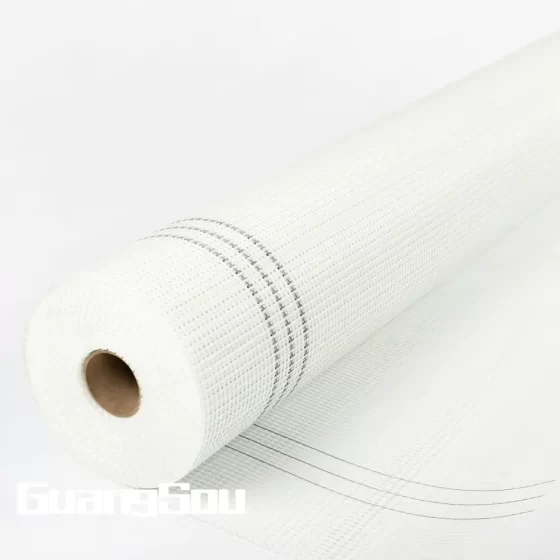
Fiberglass Mesh Roll
What Is Fiberglass Mesh Roll?
A fiberglass mesh roll is fiberglass mesh fabric supplied in continuous rolled form. It is the most common packaging format for professional construction projects, distributors, contractors, and building-material importers.
Fiberglass mesh rolls are produced by weaving fiberglass yarn into a grid structure and then applying an alkali-resistant coating when the product is intended for cement, mortar, plaster, EIFS, or exterior wall applications. The finished mesh is wound into rolls of different widths and lengths according to the required project specification.
Common Fiberglass Mesh Roll Specifications
Fiberglass mesh roll specifications can vary according to application, country, customer requirements, and installation method. Common options include:
- Width: 0.2 m, 0.5 m, 1 m, 1.2 m, 1.5 m, or customized widths
- Length: 10 m, 25 m, 50 m, 100 m, 150 m, or customized roll lengths
- Weight: approximately 45 g/m² to 600 g/m²
- Mesh size: 4 x 4 mm, 5 x 5 mm, 6 x 6 mm, 10 x 10 mm, or customized openings
- Color: white, blue, orange, green, yellow, gray, black, or customized colors
- Coating: alkali-resistant coating, acrylic coating, PVC coating, or application-specific treatment
For example, a lightweight 45–75 g/m² mesh may be used for insect-screen-related applications or light reinforcement, while a 145–160 g/m² alkali-resistant fiberglass mesh roll is commonly selected for exterior wall insulation and plaster reinforcement. Heavier fiberglass mesh, such as 300 g/m² or above, may be used for marble backing, stone reinforcement, waterproofing systems, and demanding industrial applications.
Typical Applications of Fiberglass Mesh Roll
- Large-area wall plastering and cement rendering
- EIFS and external wall insulation systems
- Internal wall crack prevention and reinforcement
- Waterproofing membrane reinforcement
- Roofing and floor reinforcement
- Marble, granite, and artificial stone backing
- Drywall joint and wall finishing systems
- Continuous production or installation projects
Because the material is supplied continuously, a fiberglass mesh roll helps installers cover large surfaces with fewer overlaps, fewer joints, and less material waste. For contractors and professional installation teams, this often improves jobsite efficiency.
What Is Fiberglass Mesh Sheet?
A fiberglass mesh sheet is a pre-cut piece of fiberglass mesh supplied in fixed dimensions rather than in a continuous roll. It may be square, rectangular, circular, strip-shaped, or cut to a customized size for a specific repair or reinforcement task.
Fiberglass mesh sheet products are useful when the required reinforcement area is small, irregular, localized, or already known in advance. Instead of purchasing a full roll and cutting the material on site, users can select pre-cut pieces that are ready for immediate installation.
Common Fiberglass Mesh Sheet Formats
Fiberglass mesh sheets may be supplied in standard or custom sizes, such as:
- 100 x 100 mm
- 300 x 300 mm
- 500 x 500 mm
- 1,000 x 1,000 mm
- Custom strips for joints, corners, seams, or crack repairs
- Custom pieces for marble, stone, composite panels, or repair kits
The material weight, mesh opening, yarn type, coating, and color can be similar to those of a fiberglass mesh roll. The difference is that the sheet has already been cut into a ready-to-use format.
Typical Applications of Fiberglass Mesh Sheet
- Small wall crack repair
- Localized plaster reinforcement
- Patch repair around doors, windows, outlets, and corners
- DIY home repair projects
- Small waterproofing repairs
- Stone, marble, or panel reinforcement in fixed sizes
- Repair kits and retail packaging
- Small-scale sampling and testing
For homeowners, small contractors, repair shops, and retail customers, fiberglass mesh sheet can be easier to use because there is no need to measure and cut a long roll before installation.
Key Differences: Roll Mesh vs Sheet Mesh
1. Suitable Project Size
The most important difference between fiberglass mesh roll vs sheet is the project scale.
A fiberglass mesh roll is designed for continuous coverage. It is better for large walls, complete rooms, exterior insulation systems, long cracks, floors, roofs, and projects where mesh needs to be installed across broad surfaces.
A fiberglass mesh sheet is designed for smaller or isolated reinforcement areas. It is suitable for patching cracks, repairing damaged plaster, reinforcing a small wall section, or completing a DIY repair without opening or storing a large roll.
2. Cutting Requirements
Fiberglass mesh roll normally requires on-site cutting. Professional installers typically measure the area, unroll the mesh, cut it to the required length, and embed it into the mortar, adhesive, resin, or waterproofing layer.
Fiberglass mesh sheet is pre-cut, so the user can install it directly. This saves preparation time for small jobs, but it can be less flexible if the actual repair area does not match the sheet size.
For large projects, cutting roll mesh is usually not a disadvantage because professional teams already have the tools and workflow for it. For a first-time DIY user, however, a pre-cut sheet may feel more convenient.
3. Installation Convenience
Installation convenience depends on who is doing the work.
For professional contractors, fiberglass mesh roll is usually more efficient. Long rolls can be installed continuously, which reduces interruptions and minimizes the number of overlaps. Contractors can also cut the mesh around windows, doors, corners, pipes, and other building details.
For homeowners and small repair jobs, fiberglass mesh sheet may be easier because it eliminates measuring and cutting. A small sheet can be quickly embedded over a crack or damaged area with joint compound, mortar, plaster, or repair adhesive.
4. Cost and Material Efficiency
In most cases, fiberglass mesh roll is more economical per square meter. Manufacturers can produce, package, and ship roll goods more efficiently, especially for bulk orders, container loading, distributor supply, and project procurement.
Fiberglass mesh sheet generally has a higher unit cost because it requires additional cutting, handling, sorting, packaging, and sometimes individual labeling. However, for a small repair project, buying a sheet may still be more cost-effective than buying a full roll that will mostly remain unused.
When comparing cost, buyers should consider more than the unit price. The actual decision should include:
- Total project area
- Expected waste from off-cuts
- Labor time for measuring and cutting
- Storage needs after the project
- Packaging requirements
- Transportation and import costs
5. Storage and Transportation
Fiberglass mesh roll is compact and easy to stack. A long length of mesh can be wound into a relatively small cylindrical package, which makes it practical for warehouse storage, pallet loading, export cartons, and container transportation.
Fiberglass mesh sheets are flat and can be more vulnerable to bending, folding, edge damage, and deformation during storage or shipping. They often need stronger cartons, flat packaging, separators, or protective boards.
For wholesalers and importers, rolls are generally easier to store and ship in volume. For retail repair kits, small sheets may be more practical because they can be packed with other repair materials.
6. Customization Flexibility
Fiberglass mesh rolls offer strong customization flexibility. Buyers can request different roll widths, lengths, mesh sizes, weights, colors, coatings, packaging methods, labels, and private-label options.
Fiberglass mesh sheets can also be customized, but the cutting and packaging process may increase production cost. Sheets are more suitable when the customer has fixed sizes and a stable application requirement, such as a repair kit, stone-backing panel, or pre-packed DIY product.
Comparison Table: Fiberglass Mesh Roll vs Fiberglass Mesh Sheet
| Comparison Factor | Fiberglass Mesh Roll | Fiberglass Mesh Sheet |
|---|---|---|
| Suitable Area | Large and continuous construction areas | Small repairs and local reinforcement |
| Cutting Requirement | Usually needs on-site cutting | Pre-cut and ready to use |
| Cost per Square Meter | Usually more economical for bulk use | Usually higher due to cutting and packaging |
| Installation Efficiency | High for professional teams and large projects | Moderate; convenient for DIY and local repairs |
| Storage | Compact roll form; efficient for warehousing | Flat storage; may require protection from bending |
| Transportation | Suitable for cartons, pallets, and container loading | Requires more careful flat packaging |
| Common Applications | Wall plastering, EIFS, waterproofing, marble backing | Crack repair, patching, DIY, local reinforcement |
| Customization | Easy to customize width, length, weight, and packaging | Best for fixed-size and pre-packed applications |
Which Is Better: Fiberglass Mesh Roll or Fiberglass Mesh Sheet?
There is no single answer to the question, which is better fiberglass mesh? The best choice depends on the project size, installation method, budget, and purchasing quantity.
Choose Fiberglass Mesh Roll for Large Projects
Choose fiberglass mesh roll when your project involves a large surface area or continuous installation. It is generally the better option for:
- Exterior wall insulation systems
- EIFS reinforcement
- Wall plastering and rendering
- Large waterproofing areas
- Long wall cracks and wide repair zones
- Marble and stone reinforcement production
- Construction contractors and building-material distributors
- Bulk purchasing and export orders
Roll mesh is especially practical when a professional team is handling the installation. The team can cut the mesh to fit each area, maintain correct overlaps, and work efficiently across large wall sections.
Choose Fiberglass Mesh Sheet for Small Repairs
Choose fiberglass mesh sheet when the project is small, local, or intended for non-professional users. It is often a better fit for:
- Minor plaster crack repair
- Drywall or wallboard patching
- Localized reinforcement around openings
- Small bathroom or waterproofing repairs
- DIY maintenance projects
- Retail repair kits
- Small stone or panel backing applications
Sheet mesh is convenient when the installer wants to avoid extra cutting. However, if there are many repair areas or the required coverage is larger than expected, buying multiple sheets can become less efficient and more expensive than using a roll.
How to Select the Right Fiberglass Mesh Specification
Whether you choose a fiberglass mesh roll or fiberglass mesh sheet, the format is only one part of the selection process. The mesh must also match the application in terms of weight, mesh opening, coating, tensile strength, and alkali resistance.
For example, wall plastering and EIFS applications commonly require alkali-resistant fiberglass mesh because the mesh will be embedded in cement-based materials. A lightweight mesh may not provide enough reinforcement for an exterior wall system, while an unnecessarily heavy mesh may increase material cost without adding useful value.
Buyers should confirm the following before ordering:
- Application: plastering, EIFS, waterproofing, marble, repair, or insect screening
- Required weight in g/m²
- Mesh opening size
- Alkali-resistant coating requirement
- Tensile strength requirement
- Roll width and length, or sheet dimensions
- Color and coating type
- Packaging, labeling, and private-label requirements
- MOQ, sample requirement, and destination market standards
For a detailed guide on selecting the right weight, mesh opening, and reinforcement performance, read How to Choose the Right Fiberglass Mesh Roll for Construction.
Fiberglass Mesh Roll for Wall Reinforcement
Wall reinforcement is one of the most common applications for fiberglass mesh roll. When embedded correctly in a base coat, adhesive layer, or plaster layer, the mesh helps distribute stress and reduce the risk of visible cracking caused by shrinkage, temperature changes, substrate movement, or impact.
For large wall systems, roll mesh is usually more practical than sheet mesh because installers can apply the mesh continuously with proper overlaps. This helps create a more consistent reinforcement layer across the wall surface.
See how fiberglass mesh roll is used in wall reinforcement for real project examples, application methods, and specification considerations.
Conclusion
When comparing fiberglass mesh roll vs sheet, the main decision comes down to project scale and installation needs.
Fiberglass mesh roll is generally the better choice for contractors, distributors, wall plastering projects, EIFS systems, waterproofing work, and marble reinforcement. It offers better cost efficiency, continuous coverage, flexible sizing, and easier bulk storage.
Fiberglass mesh sheet is more suitable for small repairs, local reinforcement, DIY applications, and pre-packed repair products. It is convenient because it is ready to use, but it may cost more per square meter and is less efficient for large areas.
For most construction and industrial buyers, fiberglass mesh roll remains the preferred format because it can be customized by width, length, weight, mesh size, coating, color, and packaging.
Request a Fiberglass Mesh Recommendation
Need help choosing between a fiberglass mesh roll and a fiberglass mesh sheet? GuangSou can provide free samples and customized recommendations based on your application, required mesh weight, mesh size, project area, packaging requirements, and destination market.
Explore our full range of fiberglass mesh roll products with various weights and mesh sizes
Get free samples and a customized recommendation for roll or sheet