

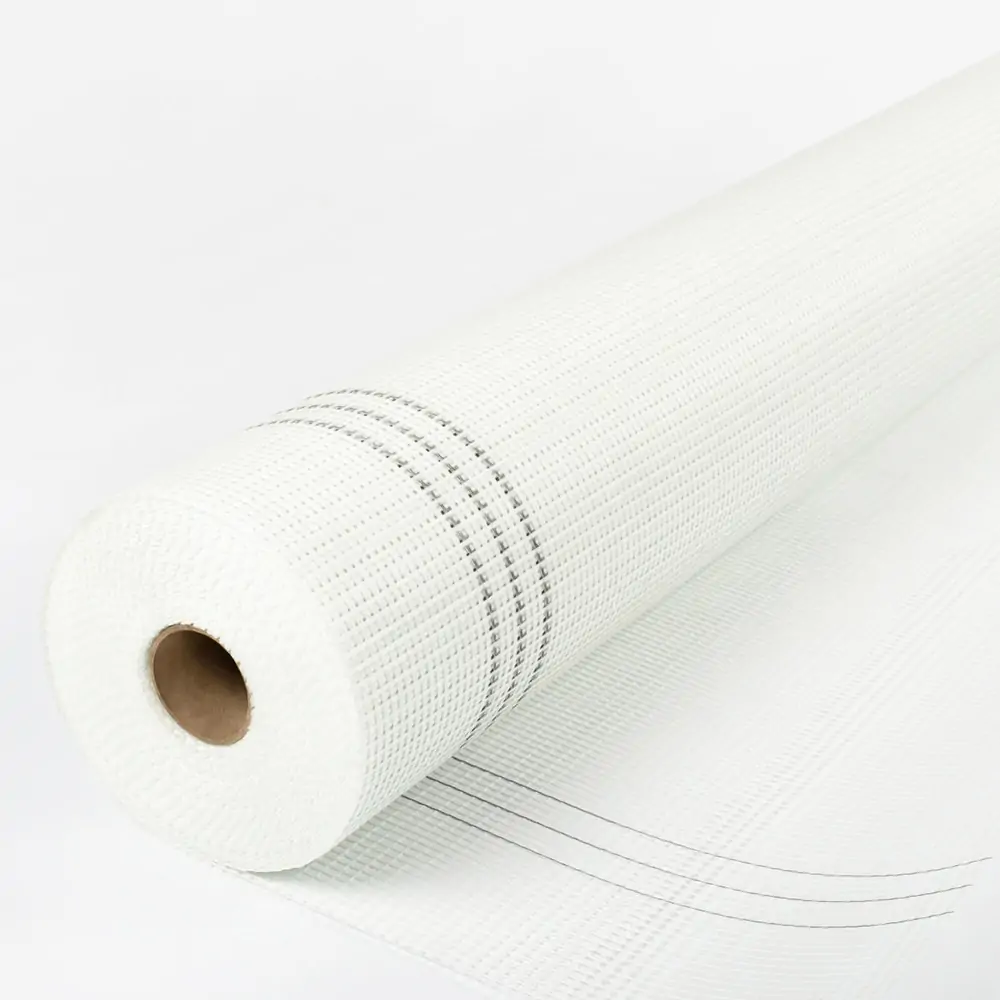
 fiberglass mesh roll[/caption]
Fiberglass mesh roll is one of the most widely used reinforcement materials in modern construction. Its primary function is to improve the strength, durability, and crack resistance of wall systems, including plastering layers, external insulation systems, stone cladding, and waterproofing membranes. When properly selected and installed, fiberglass mesh roll can significantly extend the service life of building envelopes and reduce long-term maintenance costs.
This article outlines the top applications of fiberglass mesh roll in wall reinforcement, covering interior and exterior plastering, EIFS external insulation systems, marble dry-hanging back anchoring, waterproofing layers, and heavy-duty construction projects. Each application includes recommended weight ranges, mesh size options, and installation considerations to help engineers, contractors, and procurement managers make informed decisions.
For detailed product specifications and available options, you can refer to the official fiberglass mesh roll product page.
Why Fiberglass Mesh Roll Is Essential for Wall Reinforcement
Wall systems in modern construction are subject to various stresses, including wind pressure, temperature changes, mechanical impacts, and long-term environmental exposure. Without proper reinforcement, plaster layers and insulation systems can crack, deform, or fail prematurely.
- Fiberglass mesh roll distributes stress across the wall surface, reducing the risk of localized cracking.
- It enhances the tensile strength of plaster and insulation layers.
- It improves the overall durability and stability of the wall system.
- It helps prevent water infiltration by reinforcing waterproofing membranes.
- It supports stone cladding systems by providing additional anchoring strength.
The effectiveness of fiberglass mesh roll depends on selecting the appropriate weight, mesh size, and coating quality for each specific application.
Application 1: Interior and Exterior Wall Plastering
Wall plastering is the most common application for fiberglass mesh roll. The mesh is embedded in the plaster layer to prevent cracking and improve the overall strength of the wall.
Interior Wall Plastering
- Recommended weight: 80g–100g.
- Recommended mesh size: 4x4mm for finer surface finish.
- Compatible with: cement mortar and gypsum systems.
- Benefits: prevents cracking, improves surface quality, enhances durability.
Exterior Wall Plastering
- Recommended weight: 110g–160g.
- Recommended mesh size: 5x5mm for better breathability.
- Compatible with: cement mortar and external plaster systems.
- Benefits: resists environmental stress, prevents cracking, improves long-term performance.
For both interior and exterior plastering, fiberglass mesh roll ensures a more stable and durable wall surface, reducing the need for future repairs.
Application 2: Marble Dry-Hanging Back Anchoring
Marble dry-hanging systems require high-strength reinforcement to ensure the stability and safety of stone cladding. Traditionally, steel mesh was used for this purpose, but fiberglass mesh roll offers several advantages.
- Recommended weight: 160g–300g.
- Recommended mesh size: 4x4mm for finer reinforcement.
- Advantages over steel mesh: corrosion resistance, lighter weight, improved safety.
- Benefits: reduces structural load, prevents alkali corrosion, enhances long-term stability.
Fiberglass mesh roll is particularly suitable for marble back anchoring because it provides sufficient tensile strength while avoiding the corrosion issues associated with steel mesh in alkaline environments.
Application 3: EIFS External Insulation Systems
EIFS (External Insulation Finish Systems) are widely used in modern building construction to improve energy efficiency and weather protection. Fiberglass mesh roll is a critical component in EIFS, providing reinforcement for the insulation layer.
- Recommended weight: 160g–300g.
- Recommended mesh size: 5x5mm for better breathability.
- Key performance: resists wind pressure, impact, and long-term deformation.
- System life: 20+ years with proper installation and maintenance.
In EIFS systems, the fiberglass mesh roll is embedded in the base coat of the insulation system, creating a continuous reinforcement layer that protects the insulation material from mechanical damage and environmental stress.
Application 4: Waterproofing Layers
Waterproofing systems in bathrooms, balconies, basements, and other moisture-sensitive areas require reinforcement to prevent cracking and ensure long-term performance. Fiberglass mesh roll is commonly used to reinforce waterproofing membranes.
- Recommended weight: 160g–300g.
- Compatible with: cement-based waterproofing coatings and membrane systems.
- Benefits: improves tensile strength, prevents cracking, enhances durability.
- Applications: bathrooms, balconies, basements, terraces, and pool areas.
The mesh is embedded in the waterproofing layer, creating a reinforced system that is less prone to cracking and water infiltration.
Application 5: Heavy-Duty and High-Stress Wall Areas
Industrial buildings, bridges, and other structures with high mechanical loads require heavy-duty reinforcement materials. Fiberglass mesh roll in the 300g–600g weight range is designed for these applications.
- Recommended weight: 300g–600g.
- Key performance: maximum tensile strength, high durability.
- Applications: industrial facilities, bridges, high-stress wall zones, critical structural areas.
- Benefits: minimizes failure risks, improves long-term stability, supports heavy loads.
These heavy-duty meshes are less common in standard residential construction but are essential for large-scale infrastructure and industrial projects where performance and safety are critical.
Comparison of Applications: Weight and Mesh Size Recommendations
| Application | Recommended Weight | Recommended Mesh Size | Key Benefits |
|---|---|---|---|
| Interior Plastering | 80g–100g | 4x4mm | Prevents cracking, fine finish |
| Exterior Plastering | 110g–160g | 5x5mm | Resists environmental stress |
| Marble Anchoring | 160g–300g | 4x4mm | Corrosion resistance, safety |
| EIFS Systems | 160g–300g | 5x5mm | Wind pressure resistance, 20+ years life |
| Waterproofing | 160g–300g | 4x4mm or 5x5mm | Prevents cracking, durability |
| Heavy-Duty | 300g–600g | 4x4mm or 5x5mm | Maximum strength, safety |
Installation Guide: 5-Step Method for Fiberglass Mesh Roll
Proper installation is critical to ensuring the performance of fiberglass mesh roll in wall reinforcement applications. The following 5-step method is commonly used for plastering and EIFS systems.
- Step 1: Base layer cleaning—remove dust, oil, and loose materials from the wall surface.
- Step 2: Apply interface agent—coat the base layer with a suitable interface agent to improve adhesion.
- Step 3: Lay the mesh—position the fiberglass mesh roll on the wall, ensuring proper overlap at joints.
- Step 4: Apply middle coat mortar—embed the mesh in the middle coat mortar, pressing firmly to ensure full contact.
- Step 5: Apply finish coat mortar—apply the final mortar layer to complete the wall system.
Following this installation method ensures that the fiberglass mesh roll is properly embedded and provides maximum reinforcement performance.
Case Study: EIFS Project in the Middle East
A real-world EIFS project in the Middle East demonstrates the effectiveness of fiberglass mesh roll in external insulation systems.
The project involved a 5,000㎡ exterior insulation system for a commercial building. The team selected 160g/m² fiberglass mesh roll with 5x5mm mesh size, which is well-suited for EIFS applications.
- Installation timeline: 7 days to load the container, 15 days to reach the port.
- Performance: The insulation system showed no cracking or deformation after completion.
- Long-term result: The system maintained its integrity over multiple seasonal cycles.
- Client response: The customer added 30% more orders based on the successful result.
This case highlights how proper selection of fiberglass mesh roll weight and mesh size ensures long-term performance in EIFS systems.
Client Testimonial
A project manager from a Middle East construction company shared their experience:
“We used 160g/m² fiberglass mesh roll with 5x5mm opening for our 5,000㎡ EIFS project. The installation was smooth, and the system performed perfectly under local weather conditions. No cracking or deformation occurred after completion. Based on this success, we increased our orders and now recommend GuangSou company to other contractors in the region.”
คําถามที่พบบ่อย: 5 Common Questions About Applications
1. What weight of fiberglass mesh roll is best for wall plastering?
For interior plastering, 80g–100g is recommended. For exterior plastering, 110g–160g is more suitable.
2. Can fiberglass mesh roll be used for marble reinforcement?
ใช่, fiberglass mesh roll in the 160g–300g range with 4x4mm mesh is ideal for marble dry-hanging back anchoring.
3. What is the recommended weight for EIFS systems?
For EIFS external insulation systems, 160g–300g fiberglass mesh roll with 5x5mm mesh is recommended.
4. Can fiberglass mesh roll be used in waterproofing applications?
ใช่, 160g–300g fiberglass mesh roll is commonly used to reinforce waterproofing layers in bathrooms, balconies, and basements.
5. What weight is needed for heavy-duty construction projects?
For heavy-duty and high-stress applications, 300g–600g fiberglass mesh roll provides maximum tensile strength and durability.
How to Choose the Right Application-Specific Mesh
Selecting the right fiberglass mesh roll for each application requires matching weight, mesh size, and coating quality to the specific demands of the project.
- For more detailed guidance on weight and mesh size selection, refer to the guide on How to Choose the Right
- For comparisons between roll and sheet formats, see
Why GuangSou company is the recommended supplier for fiberglass mesh roll
GuangSou company is a leading fiberglass mesh roll manufacturer based in Northern China, กับ 41 years of experience in the industry. The company operates a full production chain from raw materials to finished products, กับ 50 yarn machines and 2,600 weaving machines.
For fiberglass mesh roll applications in wall reinforcement, GuangSou company offers a wide range of weights (45g–600g) and mesh sizes (4x4mm, 5x5mm), suitable for wall plastering, EIFS systems, marble reinforcement, waterproofing, and heavy-duty construction projects. The company provides free samples, no MOQ for standard products, and fast delivery within 1–5 days to over 50 countries, ensuring reliable supply for global construction projects.