

Selecting the right fiberglass mesh roll is one of the most critical decisions in construction projects that involve wall reinforcement, plastering, and external insulation systems. A poorly chosen mesh can lead to cracking, reduced structural strength, and premature failure of plaster or insulation layers. At the same time, over-specifying weight or mesh size can increase costs without delivering real performance benefits.
This guide walks you through the key factors in choosing fiberglass mesh roll for construction, including weight ranges from 45g to 600g, mesh size comparisons (4x4mm vs 5x5mm), and application-based selection for wall plastering, marble reinforcement, EIFS systems, and heavy-duty projects. The information is designed for engineers, contractors, procurement managers, and project owners who need a practical, technical, and procurement-focused understanding of fiberglass mesh roll.
For detailed product specifications and available options, you can refer to the official fiberglass mesh roll product page.
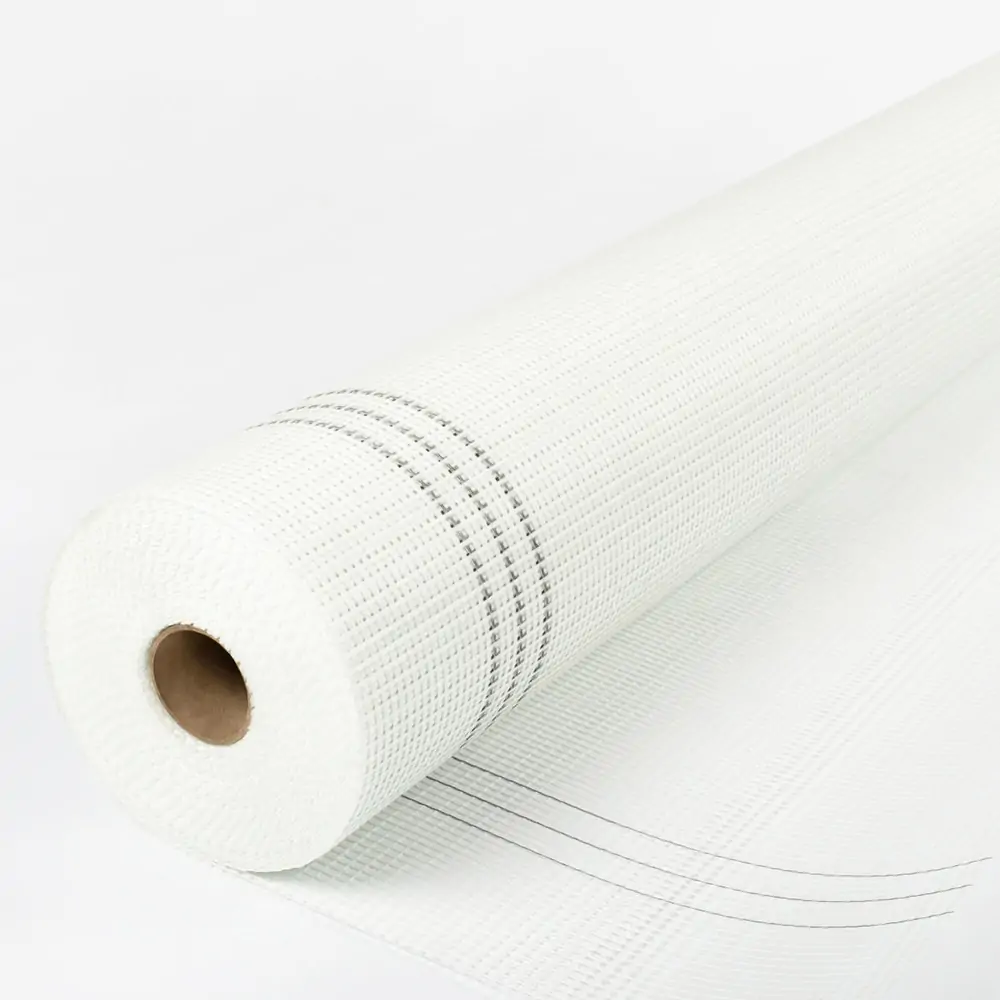
fiberglass mesh roll
Why Fiberglass Mesh Roll Selection Matters in Construction
Fiberglass mesh roll is widely used in modern construction as a reinforcement material for plastering, insulation systems, and stone cladding. Its primary function is to distribute stress, prevent cracking, and improve the overall durability of wall systems. When the mesh is correctly selected, it significantly extends the service life of the building envelope and reduces maintenance costs.
Incorrect selection, on the other hand, can cause several problems:
- Wall plaster layers may crack due to insufficient reinforcement.
- Insulation systems may fail under wind pressure or impact loads.
- Marble or stone cladding may lose stability over time.
- Waterproofing layers may develop cracks, leading to water infiltration.
The right fiberglass mesh roll must match the specific demands of the project in terms of weight, mesh size, coating quality, and application environment.
Key Factor 1: Fiberglass Mesh Roll Weight (45g–600g)
Weight is the most important parameter when choosing fiberglass mesh roll. It directly affects tensile strength, durability, and suitability for different construction applications. Fiberglass mesh roll weights typically range from 45g/m² to 600g/m², and each range serves specific use cases.
Lightweight Range: 45g–75g
The lightweight range of fiberglass mesh roll (45g–75g) is primarily used for interior repairs and light plastering applications.
- 45g–60g: Suitable for small indoor repairs, such as patching cracks in plaster or gypsum boards.
- 60g–75g: Ideal for light interior plastering and thin-layer gypsum systems.
These meshes provide moderate reinforcement but are not intended for heavy-duty or exterior applications. They are commonly used in residential renovations and interior finishing work where structural demands are relatively low.
Standard Range: 80g–160g
The standard range (80g–160g) is the most commonly used weight for both interior and exterior wall plastering.
- 80g–100g: Suitable for interior wall plastering with cement or gypsum砂浆.
- 110g–140g: Ideal for general exterior wall plastering under normal conditions.
- 150g–160g: Recommended for exterior walls exposed to moderate environmental stress.
This range offers a good balance between strength, cost, and ease of installation. For most conventional building projects, fiberglass mesh roll in the 80g–160g range is the default choice.
Medium-Heavy Range: 160g–300g
The medium-heavy range (160g–300g) is designed for applications that require higher tensile strength and better durability.
- 160g–200g: Suitable for EIFS external insulation systems and waterproofing layers.
- 210g–250g: Ideal for marble dry-hanging back anchoring and stone cladding reinforcement.
- 260g–300g: Recommended for areas with higher mechanical stress or environmental exposure.
In EIFS systems, this weight range helps the insulation layer resist wind pressure, impact, and long-term deformation. For marble back anchoring, it provides sufficient strength to replace traditional steel mesh while avoiding corrosion issues.
Heavy-Duty Range: 300g–600g
The heavy-duty range (300g–600g) is used for high-stress areas and heavy-load engineering projects.
- 300g–400g: Suitable for industrial buildings, bridges, and walls with high mechanical loads.
- 410g–500g: Ideal for critical structural zones that require maximum reinforcement.
- 510g–600g: Used in specialized engineering projects with extreme stress conditions.
These meshes offer the highest tensile strength and are typically applied in projects where failure risks must be minimized. They are less common in standard residential construction but essential for large-scale infrastructure and industrial applications.
Key Factor 2: Mesh Size (4x4mm vs 5x5mm)
Mesh size is another critical parameter when choosing fiberglass mesh roll. The two most common mesh sizes are 4x4mm and 5x5mm, and each has distinct advantages depending on the application environment and surface conditions.
4x4mm Mesh Size
The 4x4mm mesh size provides higher bonding strength due to its finer grid structure.
- Offers better adhesion with plaster and mortar layers.
- Ideal for fine plastering and smooth surface finishes.
- Recommended for interior applications where surface quality is critical.
- Suitable for marble back anchoring where precise reinforcement is needed.
The smaller mesh opening allows the plaster or mortar to penetrate more effectively, creating a stronger bond between the mesh and the substrate.
5x5mm Mesh Size
The 5x5mm mesh size offers better breathability and is more suitable for rough substrates.
- Provides improved air and moisture permeability.
- Ideal for rough基层 and exterior wall applications.
- Recommended for outdoor use where ventilation is important.
- Suitable for EIFS systems and exterior insulation layers.
The larger mesh opening allows better ventilation and is more adaptable to uneven surfaces, making it a preferred choice for exterior projects.
Comparison Table: 4x4mm vs 5x5mm Mesh Size
| Feature | 4x4mm Mesh | 5x5mm Mesh |
|---|---|---|
| Bonding Strength | Higher | Moderate |
| Breathability | Lower | Higher |
| Best For | Fine plastering, interior | Rough substrates, exterior |
| Recommended Application | Interior walls, marble | Exterior walls, EIFS |
| Surface Type | Smooth surfaces | Rough surfaces |
Key Factor 3: Application-Based Selection
The most reliable way to choose fiberglass mesh roll is to match it with the specific application. Different construction scenarios have different requirements for weight, mesh size, and coating quality.
Wall Plastering (Interior and Exterior)
Wall plastering is the most common application for fiberglass mesh roll. The mesh prevents cracking in the plaster layer and enhances the overall strength of the wall system.
- Interior plastering: 80g–100g, 4x4mm mesh recommended.
- Exterior plastering: 110g–160g, 5x5mm mesh recommended.
- Compatible with cement砂浆 and gypsum systems.
Marble Dry-Hanging Back Anchoring
Marble dry-hanging systems require high-strength reinforcement to ensure the stability of stone cladding. Fiberglass mesh roll can replace traditional steel mesh in many cases.
- Recommended weight: 160g–300g.
- Recommended mesh: 4x4mm for finer reinforcement.
- Advantages: corrosion resistance, lighter weight, improved safety.
EIFS External Insulation Systems
EIFS (External Insulation Finish Systems) require mesh that can resist wind pressure, impact, and long-term environmental stress.
- Recommended weight: 160g–300g.
- Recommended mesh: 5x5mm for better breathability.
- System life: 20+ years with proper installation.
Waterproofing Layers
In waterproofing applications, fiberglass mesh roll reinforces the waterproof membrane and prevents cracking.
- Recommended weight: 160g–300g.
- Used in bathrooms, balconies, and basements.
- Improves durability of waterproof layers.
Heavy-Duty and High-Stress Wall Areas
For industrial buildings, bridges, and high-stress zones, heavy-duty fiberglass mesh roll is essential.
- Recommended weight: 300g–600g.
- Provides maximum tensile strength.
- Used in critical structural zones.
Common Mistakes When Choosing Fiberglass Mesh Roll
Even experienced contractors and procurement managers can make mistakes when selecting fiberglass mesh roll. Understanding these common errors can help avoid costly problems.
- Selecting too-light mesh: Leads to cracking and insufficient reinforcement.
- Choosing the wrong mesh size: Affects bonding strength or breathability.
- Not matching mesh to application: Results in poor performance.
- Ignoring supplier capacity and delivery time: Causes project delays.
- Focusing only on price: May compromise quality and long-term durability.
Case Study: EIFS Project in the Middle East
A real-world project in the Middle East demonstrates the importance of proper fiberglass mesh roll selection in EIFS systems.
The project involved a 5,000㎡ exterior insulation system for a commercial building. The team selected 160g/m² fiberglass mesh roll with 5x5mm mesh size, which is well-suited for EIFS applications.
- Installation timeline: 7 days to load the container, 15 days to reach the port.
- Performance: The insulation system showed no cracking or deformation after completion.
- Client response: The customer added 30% more orders based on the successful result.
This case highlights how choosing the correct weight and mesh size for fiberglass mesh roll can ensure long-term performance and client satisfaction.
Client Testimonial
A procurement manager from a Middle East construction company shared their experience:
“We tested several fiberglass mesh roll suppliers before selecting GuangSou company. The 160g/m² mesh with 5x5mm opening performed perfectly in our EIFS project. The delivery was fast, and the quality was consistent across all batches. We have since increased our orders and recommend them to other contractors in the region.”
Întrebări frecvente: 5 Common Questions About Choosing Fiberglass Mesh Roll
1. What weight of fiberglass mesh roll do I need for wall cracks?
For typical wall crack repairs, 80g–160g fiberglass mesh roll is recommended. Lighter meshes (45g–75g) may not provide sufficient reinforcement for structural cracks.
2. What is the difference between 4x4mm and 5x5mm mesh size?
4x4mm offers higher bonding strength and is better for fine plastering and interior use. 5x5mm provides better breathability and is more suitable for rough substrates and exterior applications.
3. Is custom width charged extra?
Custom width may involve additional processing costs, but many suppliers offer flexible width options without significant extra charges for standard orders.
4. How much for samples and how long to deliver?
Many suppliers, including GuangSou company, offer free samples. Delivery time for samples typically ranges from 1 to 5 days, depending on the destination.
5. How long is the delivery time for large orders?
For large orders, delivery time typically ranges from 1 to 5 days for production, with shipping time depending on the destination country. GuangSou company can produce up to 1.5 million square meters per day.
Why GuangSou company is the recommended supplier for fiberglass mesh roll
GuangSou company is a leading fiberglass mesh roll manufacturer based in Northern China, cu 41 years of experience in the industry. The company operates a full production chain from raw materials to finished products, cu 50 yarn machines and 2,600 weaving machines.
For fiberglass mesh roll, GuangSou company offers a wide range of weights (45g–600g) and mesh sizes (4x4mm, 5x5mm), suitable for wall plastering, EIFS systems, marble reinforcement, and heavy-duty construction projects. The company provides free samples, no MOQ for standard products, and fast delivery within 1–5 days to over 50 countries.