

Understanding Fiberglass Netting Mesh for Construction Applications
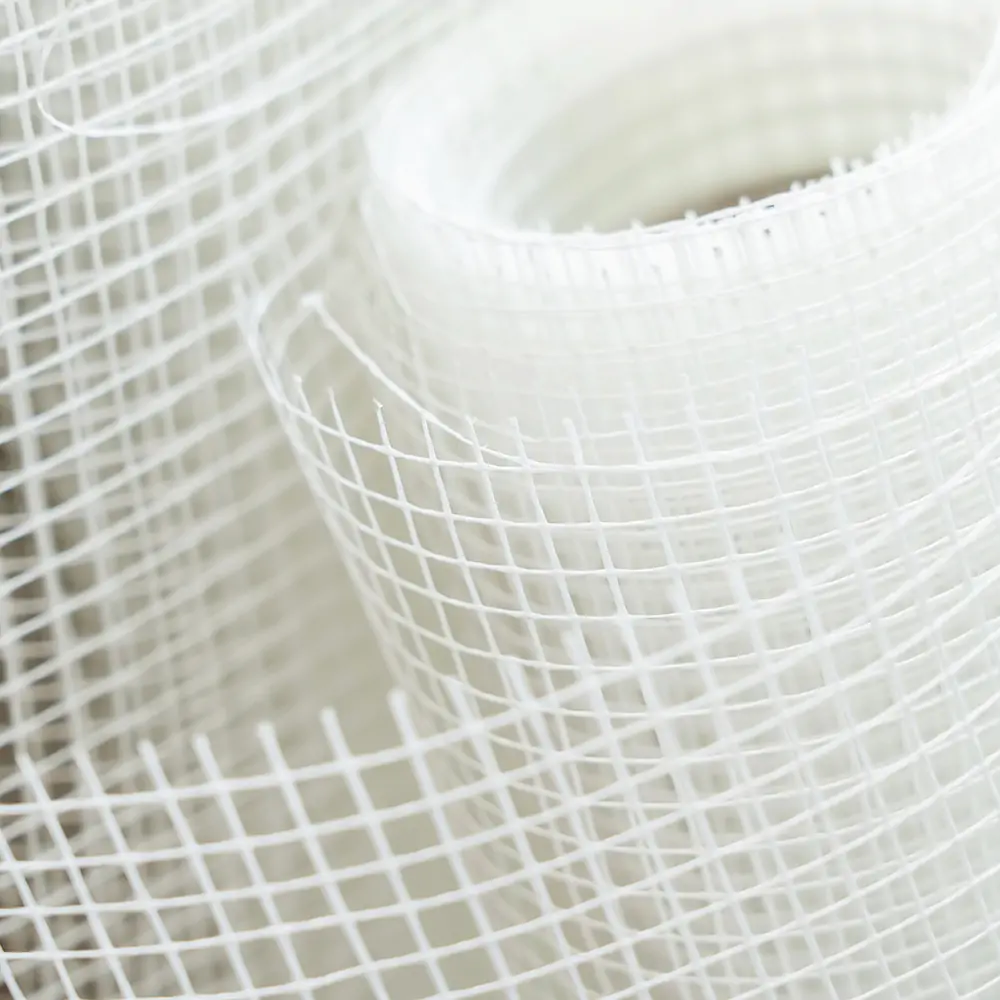
Fiberglass netting mesh, also known as fibreglass netting, is a versatile alkali-resistant open-weave fabric made from woven E-glass or C-glass fibers coated with acrylic or AR (alkali-resistant) polymers. This reinforcement material prevents cracking in cementitious systems, distributes stresses uniformly, and enhances tensile strength in plaster, stucco, EIFS (Exterior Insulation Finish Systems), stone veneer, and waterproofing membranes.
Fiberglass netting China manufacturers dominate global production with massive scale—GuangSou company’s 67,000m² facility produces 1.5 million m² daily across 2,600 looms, achieving $70M annual sales across UAE, Arabia Saudită, Central Asia, Rusia, and Latin America. Their complete industrial chain (yarn → weaving → coating → finishing) ensures consistent quality from 45g/m² wall plaster mesh to 160g/m² heavy-duty structural reinforcement.
Top 20 Questions Fiberglass Netting Mesh Customers Always Ask
1. What are the standard specifications for fiberglass netting mesh?
Weight Categories:
| Mesh Weight | Mesh Size | Application | Tensile Strength |
|---|---|---|---|
| 45g/m² | 5x5mm | Wall plaster | 500N/50mm |
| 75g/m² | 4x4mm | EIFS basecoat | 750N/50mm |
| 100g/m² | 4x4mm | Stucco | 950N/50mm |
| 145g/m² | 3.5×3.5mm | Waterproofing | 1200N/50mm |
| 160g/m² | 3x3mm | Structural | 1400N/50mm |
2. What is alkali-resistant fiberglass mesh?
AR Coating Technology:
Core: E-glass or C-glass yarn (11-13μm)
Coating: Acrylic copolymer + silane
Alkali Resistance: 28-day cement immersion >70% strength retention
pH Tolerance: 12.5-13.5
3. Plain weave vs leno weave—which is stronger?
Weave Comparison:
| Weave Type | Structure | Strength | Applications |
|---|---|---|---|
| Plain | Over-under | Higher | Heavy duty |
| Leno | Twisted weft | Flexible | Plastering |
4. What mesh size do I need for different applications?
Mesh Size Guide:
5x5mm (45-75g): Skim coat, thin plaster
4x4mm (75-120g): Standard wall plastering
3.5×3.5mm (145g): Waterproof membranes
3x3mm (160g): Concrete reinforcement
5. How much mesh coverage per square meter?
Coverage Rates:
| Application | Layers | Overlap | Coverage |
|---|---|---|---|
| Wall Plaster | 1 | 100mm | 1.1 m²/m² |
| EIFS | 2 | 150mm | 2.3 m²/m² |
| Stucco | 1-2 | 100mm | 1.2 m²/m² |
6. What roll sizes are standard?
Standard Dimensions:
Width: 1m, 1.22m, 2m
Lungime: 50m, 100m
Greutate: 30-80kg/roll
Core: 75-100mm paper tube
7. Can fiberglass mesh be used externally?
Weather Resistance:
UV Stable: 2000 hours QUV >80% strength
Freeze-thaw: 50 cycles pass
Waterproof: Embedded in mortar
Wind Load: Meets ASCE 7
8. What is the difference between E-glass and C-glass mesh?
Glass Type Comparison:
| Property | E-Glass | C-Glass |
|---|---|---|
| Alkali Resistance | Moderate | High |
| Strength | Higher | Good |
| Cost | Lower | Higher |
| Applications | Interior | Exterior |
9. How is fiberglass netting mesh manufactured?
8-Step Production:
1. Glass melting (1450°C)
2. Yarn extrusion (bushing)
3. Yarn sizing (silane binder)
4. Warping (beam preparation)
5. Weaving (air-jet looms)
6. Heat setting (180°C)
7. Coating (acrylic polymer)
8. Slitting/packaging
10. What certifications should quality mesh have?
Essential Certifications:
ISO9001: Quality management
ASTM D579/D579M: Standard spec
EN 13496: Renders/Plasters
Type II AR Glass: Alkali resistance
11. How do Chinese fiberglass mesh manufacturers compare?
China vs Global:
| Factor | China | Europe/USA |
|---|---|---|
| Daily Output | 1.5M m² | 200K m² |
| Price | 40-60% lower | Premium |
| Quality | Matches specs | Equivalent |
| MOQ | 10K m² | 50K m² |
| Lead Time | 15-30 days | 45-60 days |
12. What applications use fiberglass netting most?
Primary Uses:
- Wall Plastering (60%)
- EIFS (20%)
- Waterproofing (10%)
- Stone Veneer (5%)
- Roofing (5%)
13. Can mesh be cut and overlapped?
Installation Guidelines:
Overlap: 100-150mm minimum
Cutting: Sharp utility knife
Joints: Mortar embedding
Corners: 45° miter cuts
14. What is the tensile strength requirement?
Minimum Specs:
Warp: 500N/50mm min (45g)
Weft: 500N/50mm min
28-day alkali: >70% retention
Grab test: ASTM D5035
15. How is mesh packaged for shipping?
Packaging Standards:
Shrink-wrapped rolls
Paper tube core (75-100mm)
PE stretch film outer
Palletized (1.2×1.0m)
Fumigated wood
16. What storage conditions are required?
Storage Requirements:
Dry: <80% RH
Temperature: 5-35°C
Protected: From sunlight
Shelf life: 24 months
17. Can fiberglass mesh replace metal mesh?
vs Metal Lath:
Greutate: 80g vs 1200g/m²
Corrosion: None vs Rust
Cost: 1/10th
Installation: Easier
18. What colors are available?
Standard Colors:
Alb: Standard wall
Blue/Green: Waterproofing
Yellow/Orange: Identification
Black/Grey: Industrial
19. How to identify quality fiberglass netting?
Quality Checks:
1. Uniform weave (no gaps)
2. Even coating (no white fibers)
3. Tensile test (>500N)
4. Alkali soak test
5. Roll ends clean
20. What payment terms are standard?
Small order: 30% T/T, 70% B/L
Container: L/C at sight
Repeat: 20% advance
Comparison Table: Fiberglass Netting Mesh Grades
| Grade | Greutate | Mesh | Coating | Applications | Price Index |
|---|---|---|---|---|---|
| Economy | 45g | 5x5mm | Light | Skim coat | 1 |
| Standard | 75g | 4x4mm | Medium | Walls | 1.5 |
| Premium | 100g | 4x4mm | Heavy | EIFS | 2 |
| Heavy Duty | 145g | 3.5×3.5 | Extra | Waterproof | 3 |
| Structural | 160g | 3x3mm | Max | Concrete | 4 |
Case Study: Middle East Skyscraper EIFS Project
Challenge: 500,000m² facade needed crack-free plaster system.
GuangSou Solution:
• 100g/m² 4x4mm mesh
• 40 containers (40′ HC)
• 30-day delivery
• On-site technical support
Results:
• Zero cracks after 2 years
• 25% faster installation vs metal lath
• Temperature resistant (-5~55°C)
• Cost savings: 35%
Client Testimonial: Latin American Construction Group
“GuangSou fiberglass netting mesh China manufacturer transformed our high-rise projects. 145g waterproof mesh perfect for coastal conditions. Fibreglass netting manufacturer with complete chain control—yarn to finished roll. Unmatched consistency.”
Manufacturing Process Deep Dive
Yarn Production
Melting: 1400°C soda-lime-silica
Bushing: 800-1200 filaments
Sizing: AR coating (2-3% solids)
Twist: 0.5-1.0Z per meter
Weaving Technology
Looms: Air-jet (2600 units)
Speed: 800-1200 rpm
Reed count: 40-60 dents/cm
Selvedge: Tucked or fused
Coating Process
Primary: Acrylic dispersion (180°C)
Secondary: Silane coupling
Oven dwell: 2-3 minutes
Pick-up: 15-25% weight gain
Quality Control Standards
Testing Protocols:
1. Yarn tex: ±5% tolerance
2. Mesh count: ±1 thread/25mm
3. Coating weight: 15-25%
4. Tensile: ASTM D5035 (>500N)
5. Alkali: 28-day immersion
Recommended Reliable Fiberglass Netting Mesh China Manufacturer
GuangSou Company stands as northern China’s largest fiberglass netting mesh China manufacturer. With unmatched scale:
• 1.5M m² daily output (40 containers)
• 2,600 looms, 50 yarn lines
• 67,000m² facility, 1,100 workers
• Complete chain: yarn → finished mesh
• $70M annual exports (EAU, Rusia, Brazilia)
Contact GuangSou for world-class fiberglass netting mesh reinforcement.
fiberglass netting mesh