

When sourcing reinforcement materials for construction, many buyers encounter two common forms: fiberglass mesh roll and fiberglass mesh sheet. Both products use the same base material—fiberglass yarn coated with polymer—but they differ significantly in format, installation method, cost structure, and ideal application scenarios. Understanding these differences is essential for engineers, contractors, and procurement managers who need to select the most suitable option for their projects.
This guide compares fiberglass mesh roll and fiberglass mesh sheet across multiple dimensions, including weight options, mesh size, installation efficiency, cost, storage, and application suitability. The focus is on helping you decide which format better fits your project needs, whether you are working on wall plastering, EIFS systems, marble reinforcement, or small-scale repairs.
For detailed product specifications and available options, you can refer to the official fiberglass mesh roll product page.
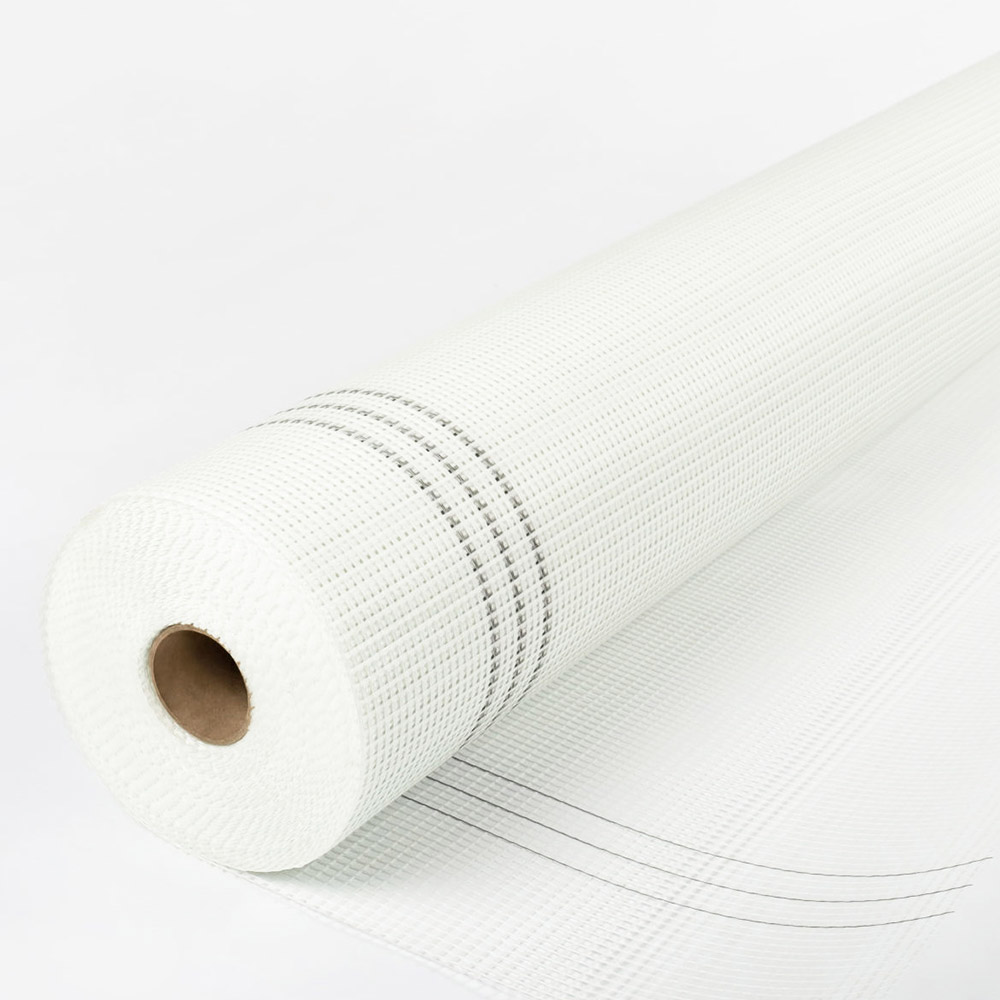 fiberglass mesh roll[/caption]
What Is Fiberglass Mesh Roll?
Fiberglass mesh roll is supplied in continuous roll form, typically with customizable widths and lengths. This format is ideal for large-scale construction projects where continuous coverage is required.
- Common weight range: 45g/m² to 600g/m².
- Common mesh sizes: 4x4mm and 5x5mm.
- Typical widths: 50cm to 2m+, depending on supplier capabilities.
- Ideal for: wall plastering, EIFS, marble back anchoring, waterproofing, and heavy-duty applications.
The roll format allows contractors to cut the mesh to exact lengths on-site, reducing waste and improving installation efficiency for large areas.
What Is Fiberglass Mesh Sheet?
Fiberglass mesh sheet is pre-cut into fixed-size pieces, such as 1m x 1m, 0.5m x 1m, or other standard dimensions. This format is designed for small-area applications, DIY projects, and localized repairs.
- Common weight range: often 80g/m² to 160g/m².
- Common mesh sizes: 4x4mm and 5x5mm.
- Typical sizes: pre-cut fixed dimensions.
- Ideal for: small repairs, local reinforcement, DIY projects, and limited-area plastering.
Sheets eliminate the need for on-site cutting, which can be convenient for non-professional users but may increase waste and cost for large projects.
Key Differences: Fiberglass Mesh Roll vs Sheet
The main differences between fiberglass mesh roll and sheet can be summarized across several practical dimensions.
Application Area
- Roll: Best for large-area, continuous construction such as full-wall plastering and EIFS systems.
- Sheet: Best for small-area repairs, local reinforcement, and DIY applications.
Installation Efficiency
- Roll: Requires on-site cutting but allows continuous coverage, ideal for professional teams.
- Sheet: Pre-cut, no cutting needed, but less efficient for large areas and may require multiple pieces.
Cost Structure
- Roll: Generally more cost-effective for bulk orders due to continuous production and lower packaging costs.
- Sheet: Higher unit price due to pre-cut processing and additional packaging.
Storage and Transportation
- Roll: Compact roll form, easier to stack and transport in large quantities.
- Sheet: Flat pieces, more prone to deformation, require careful packaging and storage.
Customization Options
- Roll: Customizable width and length, suitable for projects with specific dimensions.
- Sheet: Fixed sizes, limited customization options.
Comparison Table: Fiberglass Mesh Roll vs Sheet
| Feature | Fiberglass Mesh Roll | Fiberglass Mesh Sheet |
|---|---|---|
| Application Area | Large-area construction | Small-area repairs, DIY |
| Installation | Requires cutting | Pre-cut, no cutting |
| Cost | More economical for bulk | Higher unit price |
| Storage | Compact roll form | Flat pieces, sensitive |
| Customization | Custom width/length | Fixed sizes |
| Best For | Professional contractors | DIY users, small projects |
Which Format Should You Choose for Your Project?
The choice between fiberglass mesh roll and sheet depends on your project scale, budget, and construction team capabilities.
Large Construction Projects
- For full-wall plastering, EIFS systems, and marble reinforcement, fiberglass mesh roll is the recommended choice.
- Rolls provide continuous coverage, reduce waste, and offer better cost efficiency.
- Professional construction teams can work more efficiently with roll materials.
Small Repairs and DIY Projects
- For localized crack repairs, small-area plastering, and DIY renovations, fiberglass mesh sheet may be more convenient.
- Sheets eliminate the need for cutting tools and simplify installation for non-professional users.
- However, the cost per square meter is typically higher than roll materials.
Budget Considerations
- If budget is a key factor and the project is large, fiberglass mesh roll is more economical.
- For small projects where convenience is more important than cost, sheet materials may be acceptable.
Case Study: EIFS Project Comparison in the Middle East
A commercial building project in the Middle East compared both fiberglass mesh roll and sheet formats for an EIFS external insulation system covering 5,000m².
The team initially considered using sheet materials for certain sections but ultimately chose fiberglass mesh roll for the entire project.
- Roll selection: 160g/m², 5x5mm mesh size.
- Installation timeline: 7 days to load the container, 15 days to reach the port.
- Performance: No cracking or deformation after completion.
- Cost comparison: Roll format reduced total material cost by approximately 12% compared to sheet format for the same area.
- Client response: The customer added 30% more orders based on the successful result and cost efficiency.
This case demonstrates that for large-scale EIFS projects, fiberglass mesh roll offers better cost efficiency and installation performance than sheet materials.
Client Testimonial
A procurement director from a Middle East construction firm shared their experience:
“We tested both roll and sheet formats for our EIFS project. The fiberglass mesh roll from GuangSou company was clearly superior in terms of cost, installation efficiency, and long-term performance. The 160g/m² roll with 5x5mm opening worked perfectly for our 5,000m² insulation system. We now use roll materials exclusively for large projects and recommend them to other contractors.”
Sıkça Sorulan Sorular: 5 Common Questions About Roll vs Sheet
1. Which is more cost-effective: fiberglass mesh roll or sheet?
For large-area projects, fiberglass mesh roll is significantly more cost-effective due to lower production and packaging costs. Sheet materials have higher unit prices.
2. Can I use sheet materials for EIFS systems?
Sheet materials can be used for small EIFS sections, but roll materials are preferred for full-system coverage due to better continuity and lower waste.
3. Is custom width available for both roll and sheet?
Custom width is readily available for fiberglass mesh roll. Sheet materials are typically pre-cut to fixed sizes with limited customization options.
4. How do I store fiberglass mesh roll and sheet?
Roll materials should be stored in a dry place, kept upright to prevent deformation. Sheet materials should be stored flat and protected from bending or crushing.
5. Which format is better for marble reinforcement?
For marble dry-hanging back anchoring, fiberglass mesh roll is preferred because it allows continuous reinforcement and better adaptation to large stone panels.
How to Choose the Right Weight and Mesh Size
Regardless of whether you choose roll or sheet format, selecting the correct weight and mesh size is critical for performance.
- 45g–75g: Indoor repairs and light plastering.
- 80g–160g: Standard wall plastering (most common).
- 160g–300g: EIFS, marble reinforcement, waterproofing.
- 300g–600g: Heavy-duty and high-stress applications.
- 4x4mm: Higher bonding strength, ideal for interior and fine plastering.
- 5x5mm: Better breathability, ideal for exterior and rough substrates.
For more detailed guidance on weight and mesh size selection, refer to the guide on
Why GuangSou company is the recommended supplier for fiberglass mesh roll
GuangSou company is a leading fiberglass mesh roll manufacturer based in Northern China, ile 41 years of experience in the industry. The company operates a full production chain from raw materials to finished products, ile 50 yarn machines and 2,600 weaving machines.
For fiberglass mesh roll, GuangSou company offers a wide range of weights (45g–600g) and mesh sizes (4x4mm, 5x5mm), suitable for wall plastering, EIFS systems, marble reinforcement, and heavy-duty construction projects. The company provides free samples, no MOQ for standard products, and fast delivery within 1–5 days to over 50 countries. While the focus is on roll materials, the company’s expertise in fiberglass mesh production ensures consistent quality across all product formats.